
Platform Engineering : let's give developers the perfect working context
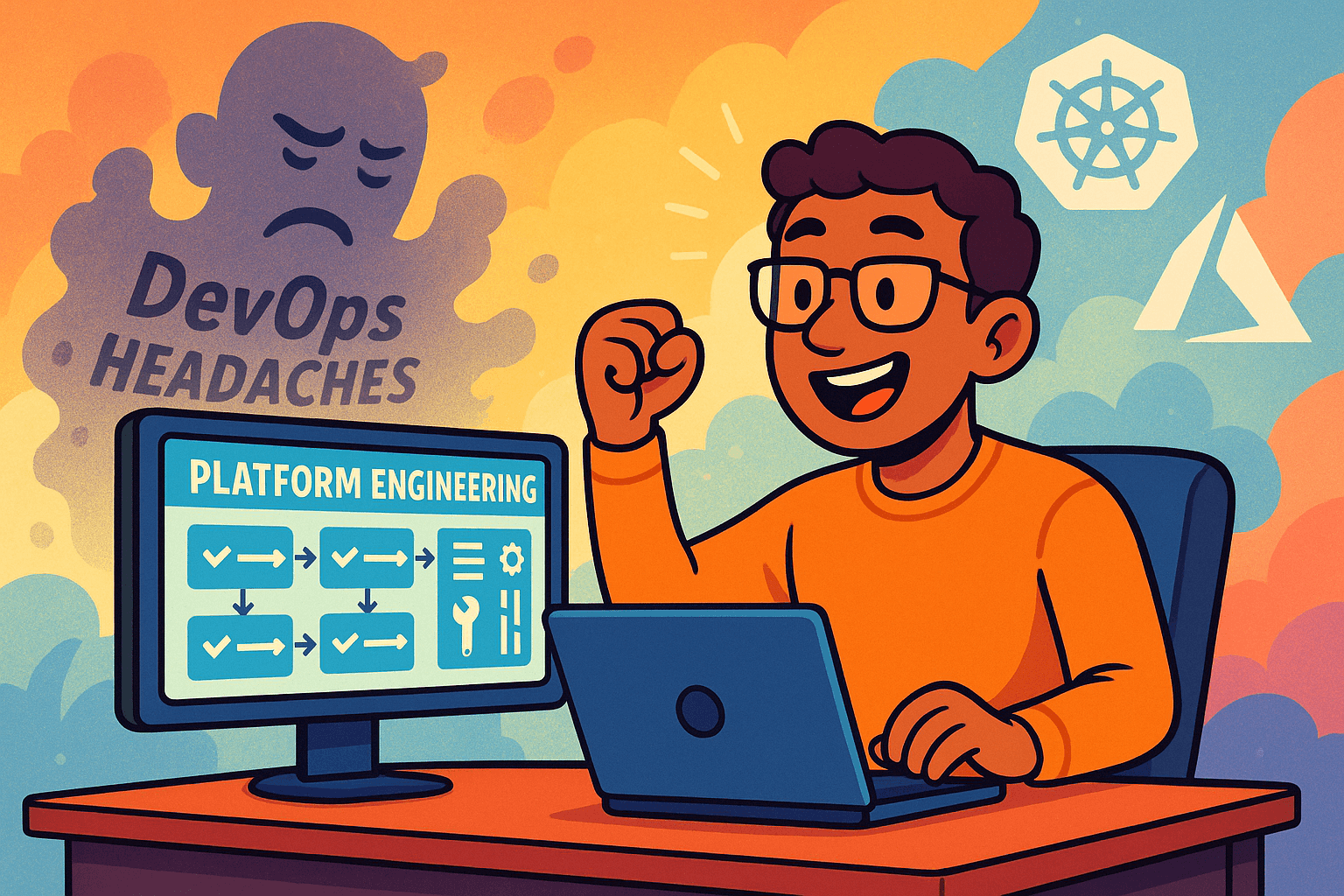
Over the past years, the DevOps methodology became the dominant way for bridging development and operations. But as systems have grown more complex (a lot of clusters, diverse management softwares and more complexity), the limitations of traditional DevOps have become more apparent: too many tools, increasing cognitive load on developers, and the limited success of self-service initiatives.
To solve this problem, Platform Engineering is emerging as a structured approach to standardize and streamline the developer experience by building internal platforms tailored to development teams’ needs.
Platform Engineering: Definition and Approach
Platform Engineering is the practice of designing, building, and maintaining an internal developer platform (IDP), treated as a product for developers.
Core principles include:
Standardized environments and workflows
Self-service access to development, testing, and deployment workflows
Built-in observability (logs, metrics, traces, alerting)
Security and governance applied consistently without blocking teams
The aim is not to eliminate DevOps or SRE, but to evolve those practices in a way that reduces complexity and operational overhead for developers.
Why Platform Engineering Has Become Necessary
Two main developments have driven its adoption:
1. Toolchain proliferation
Cloud-native promised simplicity but sometimes resulted in the opposite: developers now face a growing list of tools—Kubernetes, ArgoCD, Vault, Terraform, Velero, and more. Developers are expected to understand and operate infrastructure, pipelines, monitoring, and deployment tooling, often beyond their core responsibilities.
This leads to fragmentation, a steep learning curve, and a loss of focus. In many cases, productivity and security suffer as a result. I personally had the opportunity to give lessons to devs and it was often challenging to make them quick integrated and “DevOps-ready”.
2. The incomplete transition to DevOps
Many organizations adopted DevOps in name only. Teams were renamed but workflows didn't change. Developers were given full infrastructure ownership without adequate tooling, guidance, or automation. Non-standard pipelines, environments, and monitoring setups became the norm.
The outcome: more autonomy, but also more inconsistency and operational burden.
What makes a Functional Internal Developer Platform?
A modern internal platform should provide:
On-demand provisioning of development, test, and staging environments
Standardized CI/CD pipelines, based on defined “golden paths”
Integrated observability tools that don’t require manual configuration
Self-service interfaces (portals or APIs) for common tasks such as deployments, rollbacks, or namespace creation
Reusable and documented service templates
Centralized management of identity, secrets, and access control
Crucially, the platform should be managed like an internal product: versioned, evolving, and focused on the developer experience.
Exemple product: Backstage
Backstage, an open source project from Spotify, is increasingly used to implement internal developer portals.
It provides:
A service catalog for better visibility and documentation
Scaffolding templates for consistent project creation
Integration with CI/CD, monitoring, and alerting tools in a unified interface
A flexible plugin system to connect with existing tools like GitLab, ArgoCD, Vault, and others
Backstage offers a central access point for developers, without hiding the underlying systems.
Key Steps to Building a Platform
Start by understanding what developers actually need:
Interview teams
Identify common pain points in daily workflows
Define golden paths—clear, optimized workflows that abstract complexity without removing control:
- For example: “Create a REST API with Node.js, Postgres, and CI/CD in three clicks”
Assemble the necessary building blocks:
- Kubernetes, Terraform, GitLab, ArgoCD, Vault, Velero, Prometheus, etc.
Expose functionality through clear APIs or developer portals such as Backstage or Port.
Automate as much as possible:
- Environment provisioning, secret management, backup/restore processes
Adopt a product mindset:
Evolve the platform based on developer feedback
Version and maintain features just like any internal product
Platform Engineering Is Not Just a Stack of Tools
A common mistake is to assume that deploying a few popular tools (Kubernetes, GitLab, ArgoCD) constitutes a platform. Without consistent workflows, shared patterns, and a developer-focused interface, this approach usually results in a fragmented and fragile setup.
The real value of Platform Engineering lies in reducing unnecessary complexity while enabling teams to remain autonomous and efficient.
Conclusion
Platform Engineering isn’t a buzzword—it’s a strategic response to the operational challenges of cloud-native and multi-cloud environments. It provides organizations with a way to maintain speed and flexibility while regaining control over tooling, workflows, and infrastructure.
With tools like Backstage, ArgoCD, Terraform, and Velero, an internal developer platform becomes a true product—designed to support developers while aligning with organizational goals.