
KubeCon + CloudNativeCon Europe 2025

Like last year in Paris, we had the chance to take part in the KubeCon + CloudNativeCon Europe 2025 in London. It was an incredible experience, both in terms of content and community. It was a pleasure for us to participate, meet passionate people from all over the world, and have rich discussions around everything cloud-native. As said in the keynotes, the community is growing and it involves more and more actors.
In this article, we’ll share a high-level overview of the main trends we observed. We’ll publish more detailed articles on some of these topics in the upcoming weeks.
Trend number 1: Platform Engineering
Platform engineering was everywhere this year. Organizations are looking for scalable ways to streamline their development and operations to have a better global approach. A lot of new tools are coming and trying to meet the needs of this specific topic.
First, Backstage, an open-source developer portal, stood out as a key enabler. Paired with Crossplane, it allows platform teams to expose complex infrastructure as simple, self-service components. The goal is to create a modular, declarative, and developer-friendly experience.
Trend number 2: OpenTelemetry has become the Standard
OpenTelemetry is becoming the cornerstone of observability. It’s now the second most contributed CNCF project after Kubernetes and was featured in multiple sessions. It’s literaly everywhere.
Key takeaways:
OpenTelemetry Protocol (OTLP) over HTTP is becoming the default.
Logs, metrics, traces, and even profiling are now unified under one framework.
New semantic conventions are being defined, including for CI/CD pipelines.
Native support is growing across cloud providers like AWS, Azure, and GCP.
Certification programs and new discovery methods (e.g., Kubernetes annotation-based discovery) are being introduced.
We had the opportunity to talk a lot with people working with Dash0, a tool that leverages OpenTelemetry for vendor-neutral observability.
Trend number 3: Cloud-Native Security
Security, as always, is a hot topic, especially when it comes to secrets management and policy automation.
GitGuardian revealed shocking statistics: over 35,000 hardcoded secrets were found across 180,000 public Docker images. This shows how critical secret scanning and proper image hygiene have become.
Policy-as-code also drew attention, with tools like Kyverno or Gatekeeper offering flexible and scalable ways to manage RBAC, network rules, and admission controls through Kubernetes.
We also discovered tools like Tetragon, which brings powerful eBPF-based observability and runtime security to Kubernetes.
Global Trend: AI is everywhere
Like already said and written last year, the AI acts as a common aspect in addition to all the tendencies. In London this year, the AI and its integration into developer workflows was a central theme. An impressive part of the sessions touched on AI/ML topics, with more than 120 sessions focusing directly on areas like Kubernetes for AI workloads and integrating AI with cloud-native technologies.
Large Language Models (LLMs) and generative AI were particularly highlighted too. Tools such as Ray and Kubeflow were discussed for their roles in scaling AI applications and managing end-to-end machine learning workflows on Kubernetes.
What’s Next?
KubeCon 2025 confirmed the direction the industry is heading: toward platform-centric, observable, secure, and AI-augmented cloud-native environments.
This is just the beginning and we’ll be diving deeper into various topics in future articles. Plaform engineering, OpenTelemetry…stay tuned for more!
Personnal conclusion
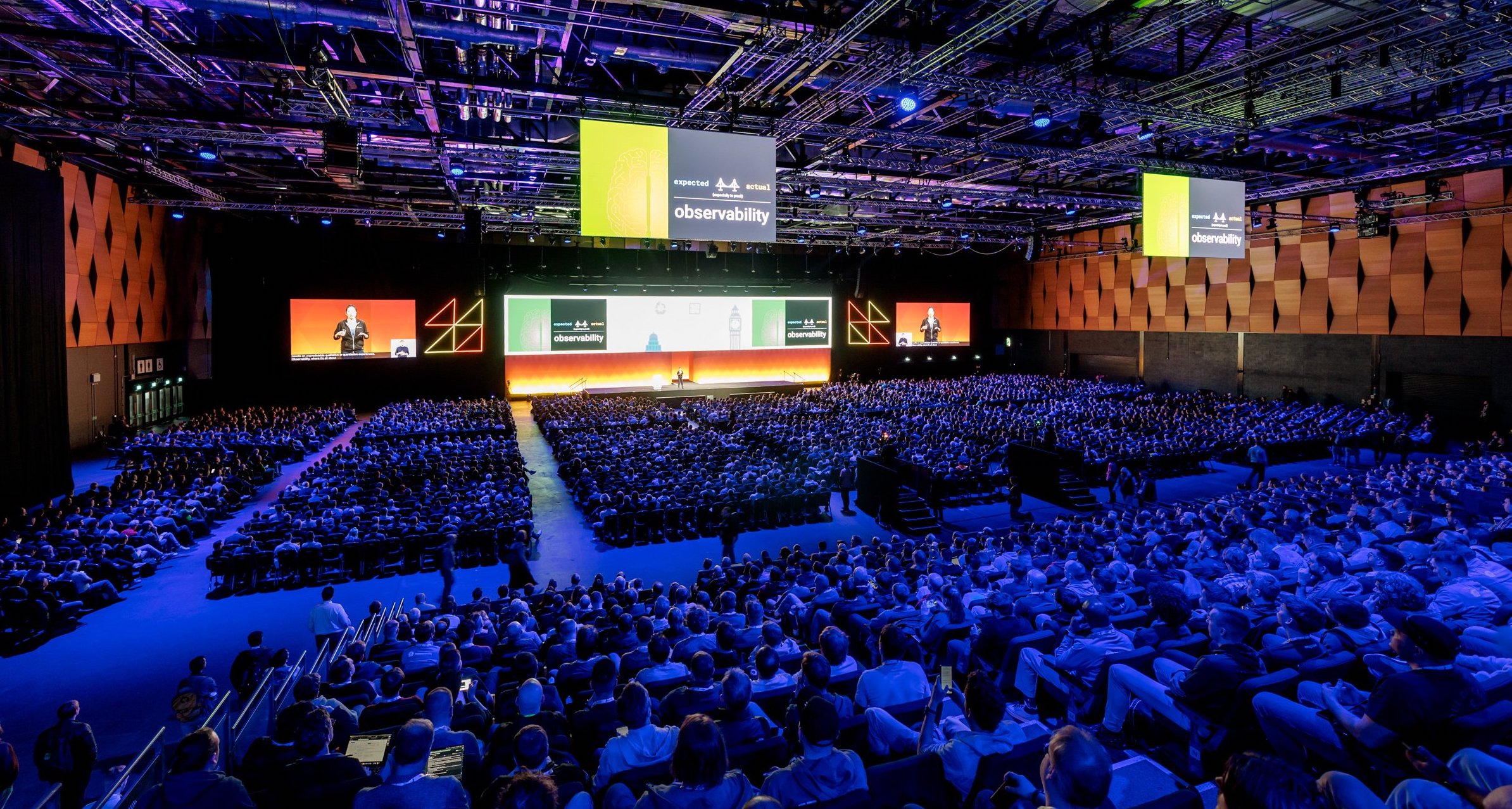
It’s been a real pleasure meeting so many people involved in the CNCF ecosystem. We encourage everyone to take part in the upcoming KubeCons in Europe (Amsterdam 2026 and Barcelona 2027). It’s truly impressive to see how much knowledge is shared at these events. To illustrate that, we’ll simply leave you with this image…